
Zigbee USB Dongle for Home Assistant, Silicon Labs EFR32MG21 based USB stick, 20 dBm output gain with PCB antenna, pre-flashed EZSP v8 for ZHA and Zigbee2MQTT, housed in a plastic shell


Zigbee USB Dongle for Home Assistant, Silicon Labs EFR32MG21 based USB stick, 20 dBm output gain with PCB antenna, pre-flashed EZSP v8 for ZHA and Zigbee2MQTT, housed in a plastic shell
Silicon Labs EFR32MG21 Zigbee 3.0 USB Dongle for Home Automation
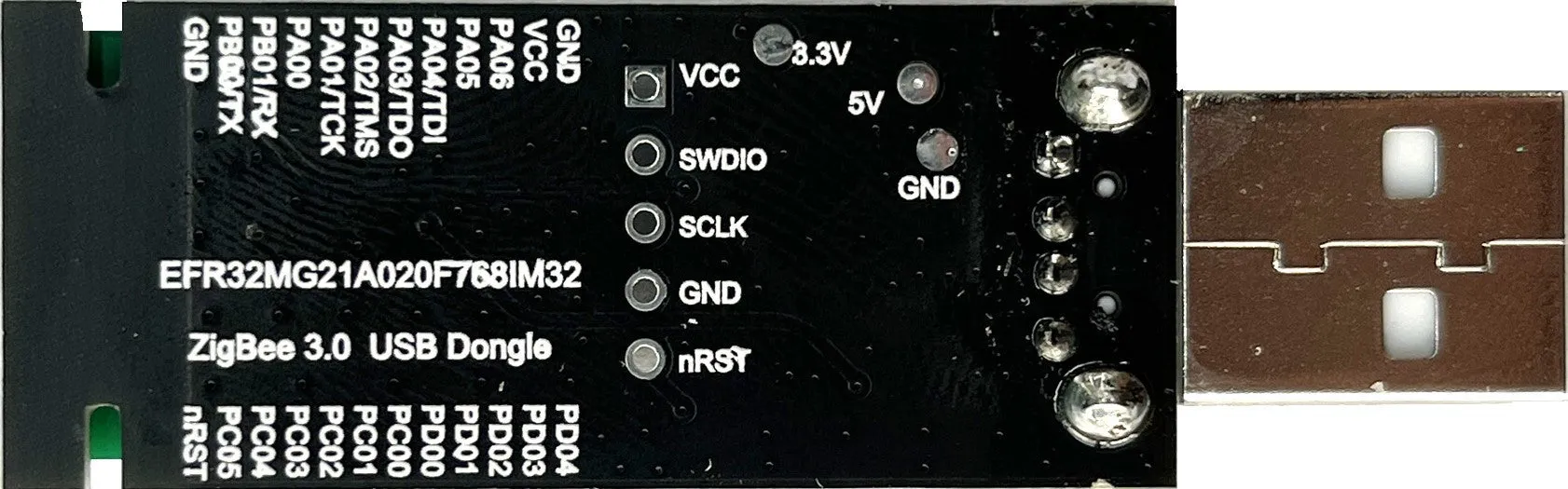
This USB dongle, centred on the Silicon Labs EFR32MG21 system-on-chip, serves as a dedicated Zigbee 3.0 coordinator, enabling you to build and control a personal smart home network. It arrives pre-configured with EZSP (EmberZNet Serial Protocol) version 8 firmware, allowing for rapid deployment without initial flashing. Primarily intended for integration with open-source home automation platforms, it provides a local, standalone alternative to proprietary vendor hubs. Its design caters to users of Home Assistant seeking to utilise the native ZHA (Zigbee Home Automation) integration or those experimenting with the Zigbee2MQTT gateway software in its pre-alpha state. As it adheres to Zigbee standards, it holds the potential to work with other gateway solutions, though specific compatibility beyond the mentioned platforms is not confirmed.
Hardware Specifications and Build

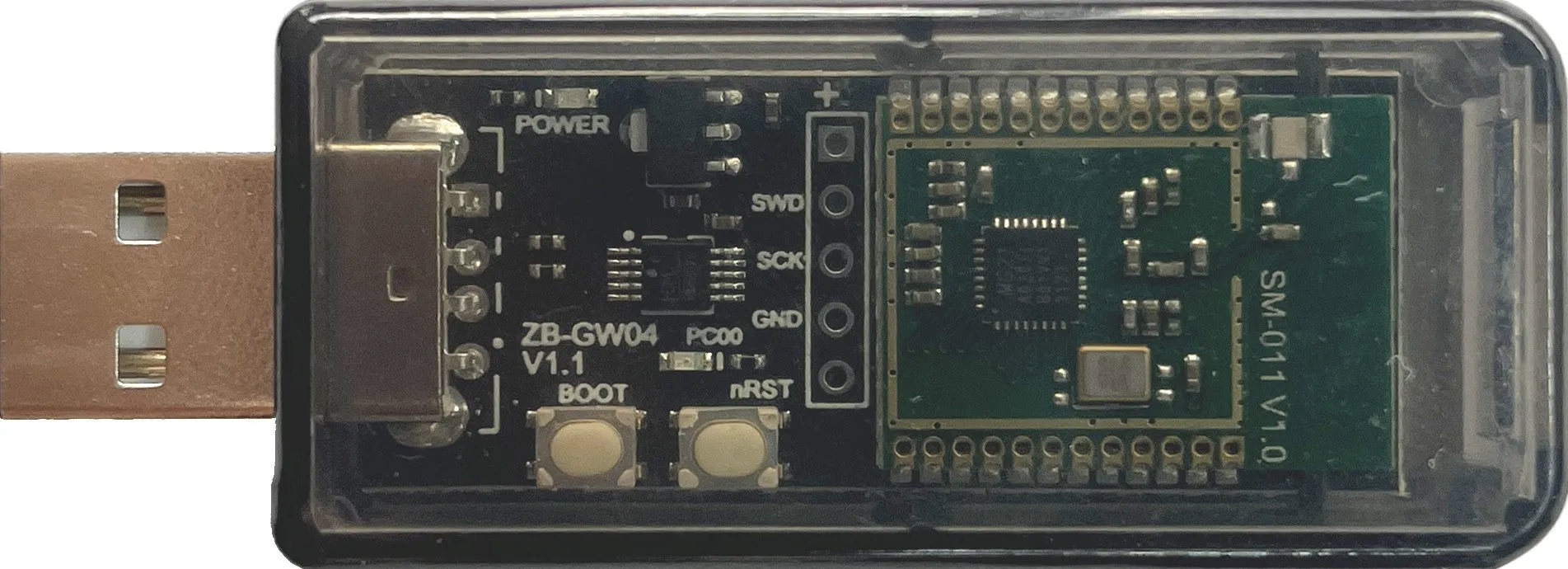
The core of this device is the EFR32MG21, a capable microcontroller from Silicon Labs designed for Zigbee, Thread, and Bluetooth mesh applications. This is paired with a CH340E chip, which handles the USB-to-serial communication, creating a reliable data bridge between the dongle and your host computer or server. The components are assembled on a printed circuit board (PCB) and protected within a durable plastic shell, resulting in a compact and portable USB stick form factor.
Radio Performance and Antenna
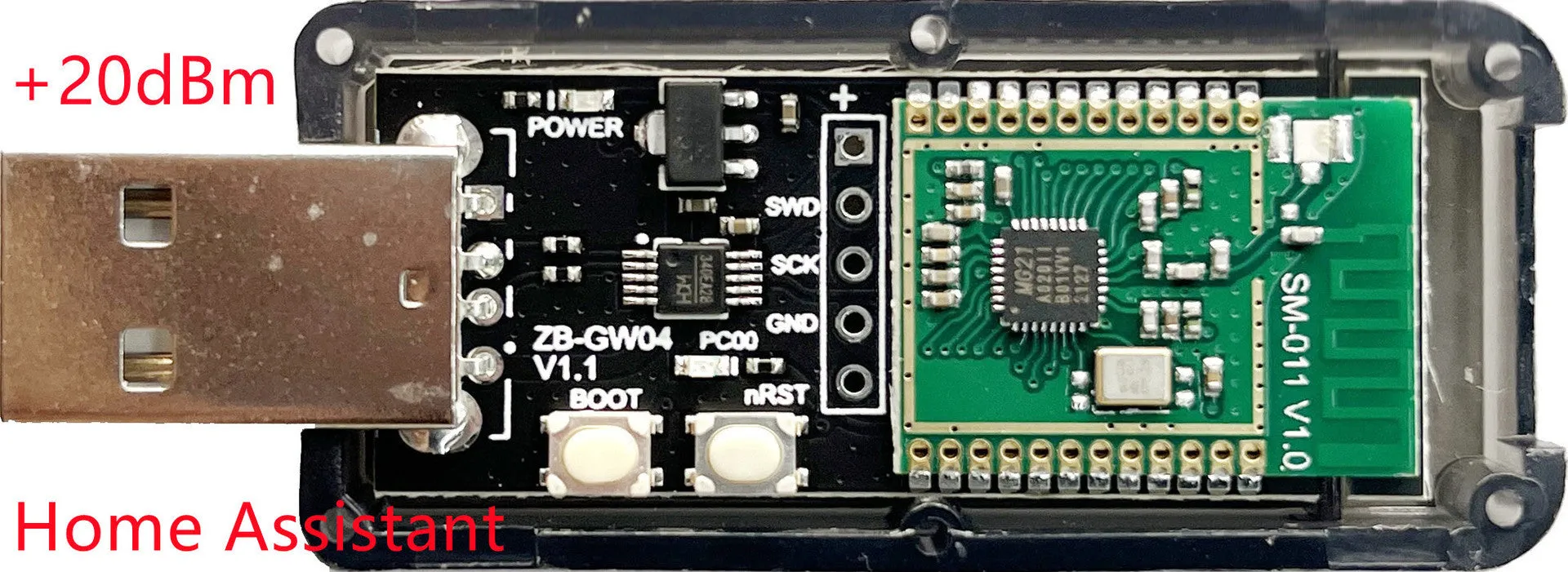
A key specification is the +20 dBm (decibel-milliwatts) output gain. This figure indicates the radio transmission power, which can contribute to stronger signal penetration and a more extensive operational range for your Zigbee network, helping devices connect reliably across larger homes or through obstacles. Signal transmission and reception are managed by an integrated PCB antenna, a common and cost-effective solution that is etched directly onto the device's circuit board, eliminating the need for an external, protruding antenna.
Physical Interface and Controls
The device interfaces via a standard USB connector, drawing power and data connectivity directly from the host port. On the PCB, there are two user-accessible buttons: a BOOT button and an nRST (reset) button. These are specifically used in tandem to place the device into a bootloader mode, which is a necessary step for performing Over-The-Air (OTA) firmware updates via the UART serial interface, ensuring the coordinator's software can be kept current.
Software Integration and Use
This dongle is not a plug-and-play consumer product but a tool for technically inclined users building a custom smart home ecosystem. Its value is realised when paired with supporting software that can communicate using the EZSP protocol it carries. The primary use cases are well-defined, focusing on integration with popular, local-first home automation platforms.
Home Assistant ZHA Integration
Within the Home Assistant ecosystem, this dongle is compatible with the built-in ZHA (Zigbee Home Automation) integration. ZHA provides a native method for Home Assistant to communicate directly with Zigbee devices via a supported coordinator like this one. Users can pair a wide range of Zigbee devices such as sensors, bulbs, and switches directly to Home Assistant, creating a vendor-agnostic network controlled locally without reliance on external cloud services.
Zigbee2MQTT Compatibility
For users who prefer or require the functionality of Zigbee2MQTT, this dongle is also a suitable hardware choice. It's important to note that support is indicated for the pre-alpha version of Zigbee2MQTT, which suggests it is an early and potentially less stable implementation. Zigbee2MQTT acts as a bridge, translating Zigbee device communications into MQTT messages, offering advanced features and extensive device support for highly customised setups.
Firmware Updates and Configuration
The device operates at a standard serial communication baud rate of 115200. For updating its internal firmware, it supports an OTA (Over-The-Air) process initiated via the UART interface. The required button sequence is precise: press and hold the BOOT button, then press and release the nRST button while still holding BOOT, and finally release the BOOT button. This sequence enters the bootloader mode, allowing new firmware to be uploaded from connected software tools.
Practical Application and Value
Choosing this coordinator dongle is a decision rooted in the desire for local control, hardware flexibility, and avoidance of vendor lock-in. It represents a core component in a DIY smart home architecture, putting the user in full command of their network's stability and privacy.
Building a Localised Network
The primary benefit is establishing a self-contained Zigbee network. Unlike Wi-Fi-based devices that congest your home network, Zigbee creates a separate, low-power mesh network where devices can relay signals for each other, improving range and reliability. This dongle acts as the hub or coordinator of that mesh, a role traditionally filled by proprietary bridges from brands like Philips Hue or IKEA.
Long-Term Usability and Maintenance
The value proposition extends to longevity and adaptability. The plastic shell protects the internal electronics for durable everyday use. The support for firmware updates via UART means the device can be improved and secured over time as new protocol features or bug fixes are released by the community or Silicon Labs. This extends the functional lifespan of the hardware beyond its initial purchase.
Considerations for the Buyer
It is crucial to understand that this is a development-oriented product. Success requires comfort with configuring home automation software like Home Assistant or Zigbee2MQTT. While it may work with other Zigbee-standard gateways, only compatibility with ZHA and the pre-alpha Zigbee2MQTT is explicitly referenced. The +20 dBm output is a technical advantage, but real-world range will also be affected by environmental factors and the mesh-forming capabilities of your other Zigbee devices.