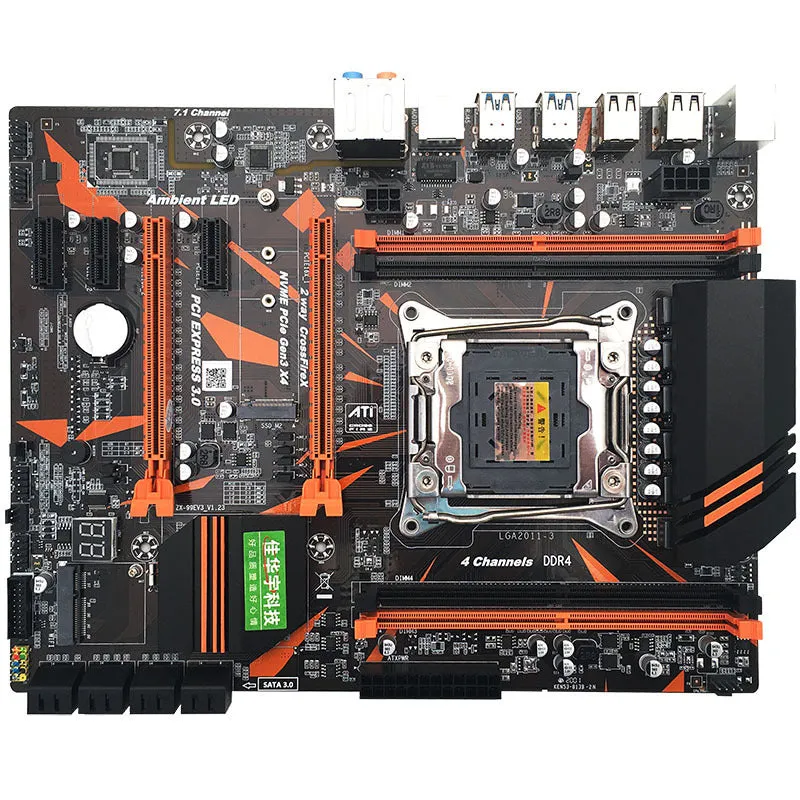
X99 computer motherboard with LGA2011-3 CPU socket, four-channel DDR4 memory support up to 128GB, integrated 7.1 channel audio and Gigabit network card, dual PCI-E x16 slots for graphics cards, M.2 NVMe interface, and 8 SATA3.0 ports in black colour.


X99 computer motherboard with LGA2011-3 CPU socket, four-channel DDR4 memory support up to 128GB, integrated 7.1 channel audio and Gigabit network card, dual PCI-E x16 slots for graphics cards, M.2 NVMe interface, and 8 SATA3.0 ports in black colour.
X99 ATX Motherboard for LGA2011-3 CPUs with Quad-Channel DDR4 and Dual PCI-E Slots

This X99 series motherboard is engineered for demanding computing tasks, providing a foundation for workstations and high-performance gaming systems. It centres on the LGA2011-3 socket, compatible with Intel's Xeon E5 v3 series processors (such as the 5820K and 5960X) and Core i7 CPUs from the same generation. A key operational note is that when an i7 processor is installed, the system cannot use server-grade REG ECC memory modules concurrently; standard desktop DDR4 must be used instead. The board's architecture supports substantial memory and storage expansion, making it suitable for content creation, data processing, and intensive multitasking environments where capacity and bandwidth are priorities.
Core Specifications and Processor Support

The motherboard's primary specification is its CPU interface. The LGA2011-3 socket is designed for Intel's high-core-count processors, offering a direct upgrade path for users needing more processing threads.
CPU Compatibility and Memory Rules
The socket officially supports Intel's Xeon E5-2600 v3 series and Core i7 processors from the corresponding desktop line, such as the i7-5820K. It is important to follow the specific memory rule: if you install a Core i7 CPU, you cannot use REG ECC server memory in the four DDR4 slots. You must use standard, unbuffered desktop DDR4 modules. This is a technical limitation of the platform's memory controller when paired with a consumer-grade i7 processor.
Memory Configuration and Capacity
Four DDR4 DIMM slots are arranged in a quad-channel configuration, which can significantly increase memory bandwidth compared to dual-channel setups when populated correctly. The board supports DDR4 memory at speeds up to 2400MHz or 2333MHz. With support for 32GB modules per slot, the total system memory can reach 128GB, providing ample RAM for virtual machines, large datasets, and memory-intensive applications.
Expansion and Connectivity Features

Beyond the CPU and memory, the motherboard offers a wide array of ports and slots for adding components. This makes it highly adaptable for various use cases, from a multi-GPU rendering setup to a server with extensive storage.
Graphics and Storage Expansion
For graphics, there are two PCI Express x16 slots, allowing for dual-GPU configurations in SLI or CrossFire for gaming or GPU computing. Storage connectivity is comprehensive, featuring eight SATA3.0 (6Gb/s) ports for hard drives and SSDs, plus a dedicated M.2 slot that supports PCIe NVMe solid-state drives for ultra-fast operating system and application loading. The M.2 interface operates at full PCIe speed for maximum performance.
Rear I/O and Internal Headers
The rear input/output panel includes a legacy PS/2 port for keyboard or mouse, a single RJ45 Gigabit Ethernet port powered by the integrated Realtek RTL8111H controller, four USB 3.0 ports, and two USB 2.0 ports. Audio connectivity is provided via a set of 3.5mm jacks supporting the integrated 7.1 channel audio output. Internally, the board has headers for two additional USB 2.0 ports and two more USB 3.0 ports, allowing for front-panel case connections.
Build and Operational Details
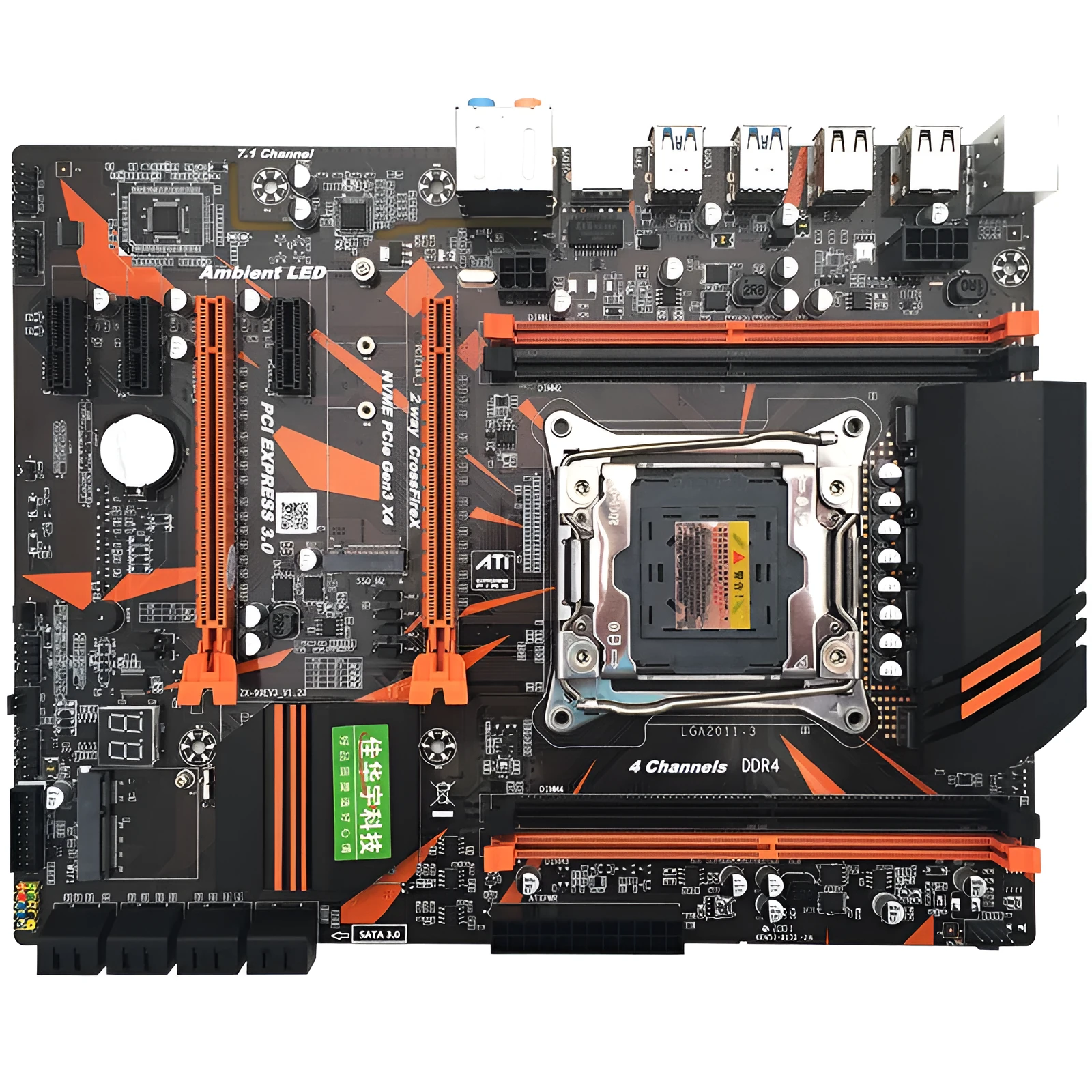
The motherboard includes several features aimed at simplifying the building process and aiding in system maintenance and troubleshooting. These practical additions provide value during assembly and over the product's lifespan.
Power Delivery and Diagnostics
Power is supplied via a standard 24-pin ATX connector and an 8-pin EPS12V CPU power connector. The documentation notes that if only a 4-pin connector is plugged into the 8-pin CPU socket, the system will rely more heavily on the main 24-pin power supply. For troubleshooting, a digital fault diagnosis display (likely a two-digit debug LED) shows post codes, and a system buzzer provides audible alerts, helping to identify issues during boot-up.
Additional Features and Warranty
Other notable features include a WiFi module interface (allowing for an add-in card), an eight-colour LED audio trace lighting system on the PCB, and support for four different power supply phases. The product comes with a three-year warranty, which includes free service for the first year and cost-based maintenance for the following two years, provided by the shop or manufacturer. Please note that the colour of the slot base plate may vary between production batches as products are continuously optimized.