
WIFI development board with ESP-8266EX microcontroller, Arduino compatible for IoT projects featuring 11 I/O pins, 1 ADC input, OTA wireless upload, and onboard 5V 1A switching power supply with black colour option


WIFI development board with ESP-8266EX microcontroller, Arduino compatible for IoT projects featuring 11 I/O pins, 1 ADC input, OTA wireless upload, and onboard 5V 1A switching power supply with black colour option
ESP-8266EX WIFI Development Board with Arduino Compatibility and OTA Wireless Upload
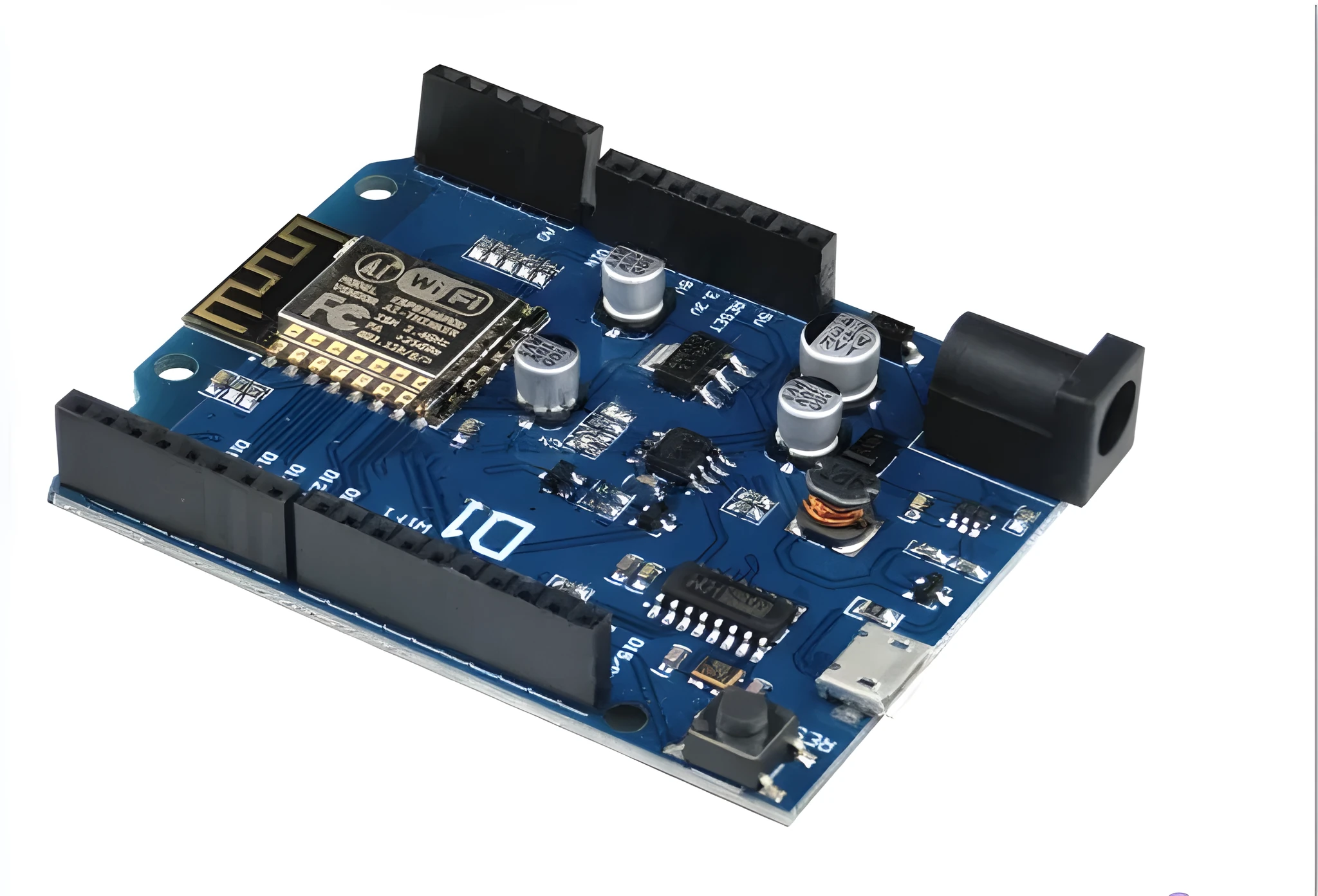
This WIFI development board centres around the ESP-8266EX microcontroller, providing makers and IoT developers with a practical platform for connected projects. Its key advantage lies in Arduino IDE compatibility, allowing those familiar with Arduino's programming environment to work without learning new software tools. The board includes 11 digital I/O pins and one ADC pin with 0-3.3V input range, offering sufficient connectivity for sensors, displays, and other peripherals commonly used in Internet of Things applications. An onboard 5V 1A switching power supply supports input voltages up to 24V, providing flexibility with power sources while eliminating the need for external power regulation in many cases.
Features and Construction

The board's design prioritises accessibility for developers transitioning from basic Arduino projects to WIFI-enabled applications. Once the required hardware packages are installed from the provided download link, programming follows the same workflow as working with an Arduino UNO board. This reduces the learning curve for those already comfortable with the Arduino ecosystem while adding wireless connectivity capabilities.
Material and Build
The development board is constructed around the ESP-8266EX microcontroller, which handles both computation and WIFI connectivity on a single chip. The physical board includes the microcontroller, supporting components, and an integrated 5V 1A switching power supply circuit. A black colour option is available for the board's finish, providing a neutral appearance suitable for various project enclosures and settings.
Size and Practical Fit
While specific dimensions aren't provided in the source text, the board's pin configuration and Arduino UNO compatibility suggest it follows standard development board footprints. The 11 I/O pins offer sufficient connectivity for typical IoT applications, while the single ADC pin supports analog sensors within the 0-3.3V range. The onboard power supply's 24V maximum input allows flexibility with various power sources, from USB adapters to larger power supplies.
Uses and Placement
This development board serves both educational and professional applications where WIFI connectivity enhances functionality. Its Arduino compatibility makes it particularly suitable for those transitioning from basic microcontroller projects to Internet of Things applications without abandoning familiar development tools.
Event or Professional Use
For professional IoT prototyping and development, the board's OTA (over-the-air) wireless upload capability allows remote firmware updates without physical connection to the device. This is particularly valuable for deployed devices in hard-to-reach locations or when managing multiple distributed sensors. The ESP-8266EX's integrated WIFI eliminates the need for additional wireless modules, simplifying both hardware design and software implementation for connected projects.
Everyday Home Use
Home automation enthusiasts can utilise this board for creating custom smart home devices, from environmental monitors to connected controllers. The Arduino IDE compatibility means existing code libraries and examples can often be adapted with minimal modification. The 11 available I/O pins provide sufficient connections for sensors measuring temperature, humidity, motion, or light, along with outputs for relays, LEDs, or small displays commonly used in home automation projects.
Benefits and Buying Value
The board offers practical advantages for developers seeking to add WIFI connectivity to projects without extensive electronics expertise. Its integrated approach reduces component count and simplifies both assembly and troubleshooting compared to separate microcontroller and WIFI module solutions.
Reuse and Low Maintenance
The Arduino compatibility ensures that skills and code developed for this board remain transferable to other Arduino-compatible platforms. OTA functionality reduces maintenance requirements once devices are deployed, as firmware updates can be pushed wirelessly rather than requiring physical access. The onboard power supply's wide input voltage range (up to 24V) provides flexibility with power sources, potentially reducing the need for additional voltage regulation components in final designs.
Why Choose This Product
This development board combines the accessibility of Arduino programming with the ESP-8266EX's integrated WIFI capabilities, offering a balanced solution for those entering IoT development. The provided download link includes necessary hardware packages and documentation, reducing setup time compared to sourcing components separately. For projects requiring wireless connectivity with moderate I/O requirements, this integrated approach can simplify both development and deployment phases while maintaining compatibility with the extensive Arduino ecosystem of libraries and community support.