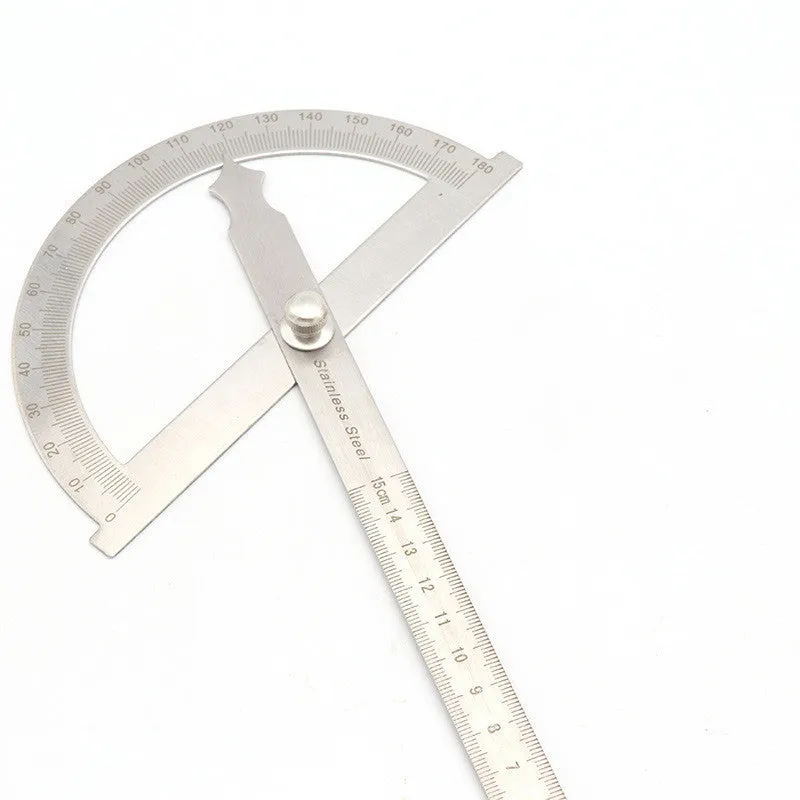
Adjustable protractor 180° measuring square for geometry drawing and angle measurement with 1° accuracy, available in 15cm hollow-large and 14.5cm solid-without trademark sizes


Adjustable protractor 180° measuring square for geometry drawing and angle measurement with 1° accuracy, available in 15cm hollow-large and 14.5cm solid-without trademark sizes
Adjustable protractor 180° measuring square for precise geometry and drawing

This adjustable protractor delivers reliable angle measurement across a full 0-180° range with a clear 1° accuracy scale. Designed as a 180° measuring square, it streamlines angle reading for geometry homework, technical drafting, and workshop projects. The tool is offered in two practical sizes: a 15cm hollow-large version that is lightweight and easy to handle, and a 14.5cm solid model (without trademark) that provides a sturdier feel. Whether you are a student tackling maths problems or a professional needing quick angle checks, this protractor offers the essential functionality without unnecessary complexity.
Features and Construction

The protractor combines simplicity with functional design. Its core specifications are grounded in practical use, including a 180-degree range and a measurement accuracy of 1 degree.
Angle Range and Accuracy
With a full 0-180° scale, this protractor handles acute, right, and obtuse angles in one device. The 1° accuracy ensures dependable readings for school tasks, basic carpentry, or design sketches. The scale markings are clearly printed for quick visual reference.
Size Options: Hollow and Solid
Two size variants are available to suit different preferences. The 15cm hollow-large model reduces material weight, making it easy to position and read without slipping. The 14.5cm solid version (without trademark) offers a denser build for those who prefer a more substantial tool in hand.
Material and Build
Made from standard acrylic or plastic, the protractor is transparent enough to see underlying lines during measurement. Its flat profile allows it to lie flat on paper or boards. The hollow model has cut-out sections for lighter weight, while the solid version has a continuous surface for added rigidity.
Uses and Placement

This protractor is designed for tasks where accurate angle measurement is needed. Its straightforward design makes it suitable for education, office, and light workshop environments.
School and Classroom Use
Geometry students will find the 1° accuracy sufficient for drawing triangles, calculating angles, and verifying theorems. The clear markings help avoid confusion during exams or homework. Both sizes fit easily into pencil cases or desk drawers.
Technical and Office Drawing
For technical drawing or architectural sketches, the protractor’s 180° range covers most common angles. The hollow version’s lighter weight reduces hand fatigue during repeated use. The solid version holds steady when used against a ruler or T-square.
Everyday and Workshop Use
Hobbyists can use this tool to measure angles for model building, woodworking layouts, or craft projects. The 15cm and 14.5cm lengths are compact enough for small workspaces yet large enough for visible readings.
Benefits and Buying Value

This protractor offers practical value through its dual-size availability and straightforward performance. Without unnecessary extra features, it focuses on core measurement needs.
Choice of Size for Different Needs
Having two size options—15cm hollow-large and 14.5cm solid—allows you to select the feel and weight that matches your working style. The hollow model is lighter and easier to reposition, while the solid model adds durability for regular handling.
Easy to Read and Use
The 0-180° scale and 1° accuracy make it straightforward to get consistent readings. The protractor’s flat design slips under textbooks or sits on drawing boards without tilting. Minimal maintenance required: just wipe clean with a dry cloth.
Why Choose This Product
If you need a reliable, no-fuss angle measuring tool at a practical size, this adjustable protractor delivers. The choice between hollow and solid construction lets you customise your purchase. It suits students, teachers, drafters, and DIY enthusiasts alike, providing essential functionality at a low entry point.