
83W Dual-Port Fast Car Charger with PPS & QC3.0 - Powers Laptops, Tablets, and Phones from Apple, Samsung, and Xiaomi
PD 65W QC3 0 18W car charger
£46.98
Skip to product information

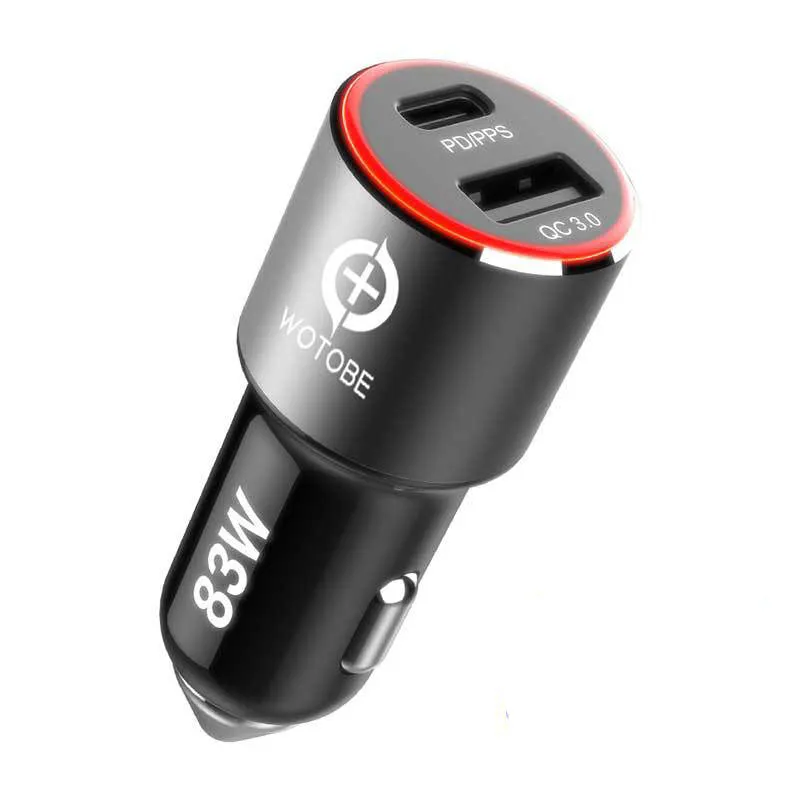 The days of choosing which device gets a proper charge during your journey are over. This 83W dual-port car charger delivers serious power from a standard 12V socket, with one port offering up to 65W via USB-C PPS/PD for laptops and tablets, and a second providing 18W via QC3.0 for smartphones. It's built for the modern, multi-device user who needs to keep a MacBook Air, Samsung Galaxy Tab, or similar gadget powered up alongside their phone, all without sacrificing charging speed. The inclusion of a high-current 5A C-to-C cable or an Apple MFI-certified Lightning cable in the box means you have a complete, high-performance charging solution ready from the moment you open the package, designed to handle the demands of professional commutes and family road trips alike.
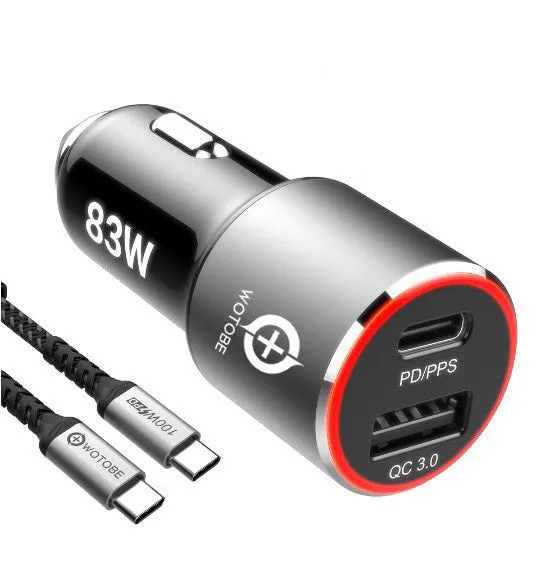 This charger is engineered to be more than just a convenient accessory; it's a reliable power source built to perform in a vehicle's unique environment. We'll break down the exact technical capabilities that enable it to fast-charge a wide array of devices and the construction details that ensure its longevity on the road.
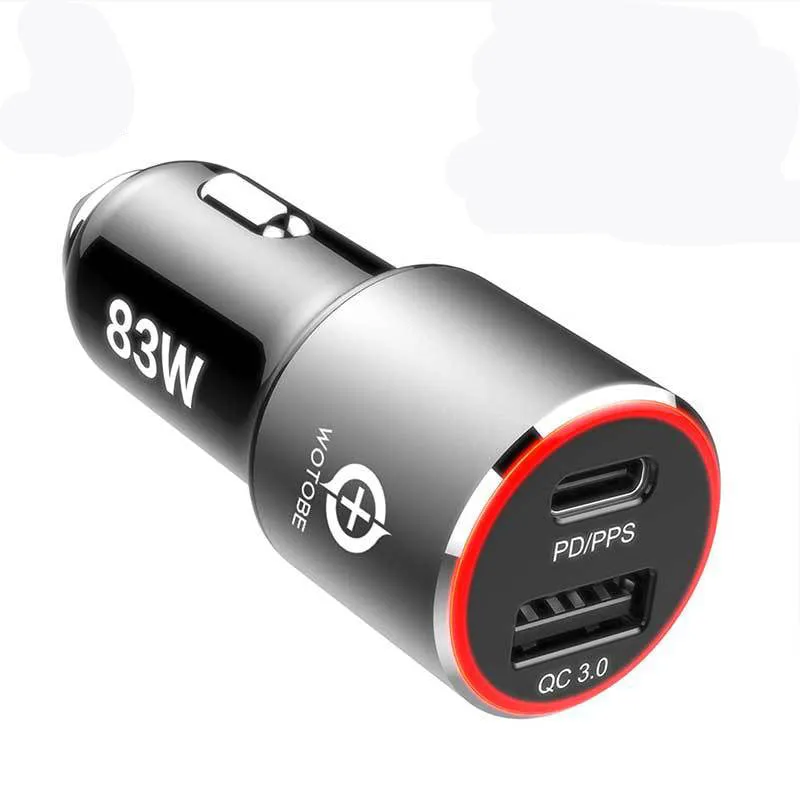 This charger moves beyond technical specs into real-world utility, fitting seamlessly into various lifestyles. Whether you're a professional on the move, a parent managing family tech, or someone who simply relies on their devices, here’s how it integrates into daily routines.
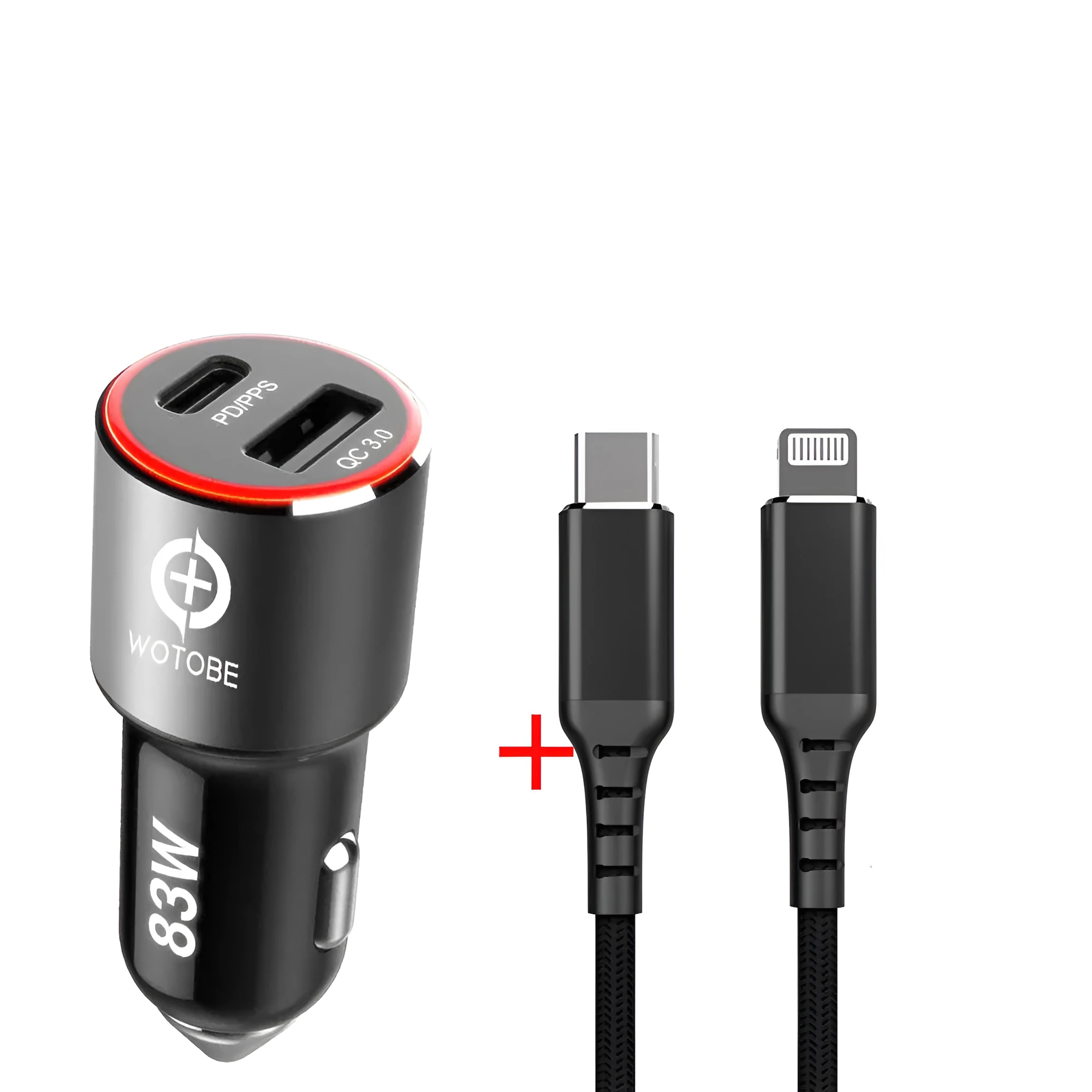 Investing in a capable car charger is about more than immediate convenience; it's about reliability, device health, and cost-effectiveness over time. Let's examine the measurable advantages this product offers.


83W Dual-Port Fast Car Charger with PPS & QC3.0 - Powers Laptops, Tablets, and Phones from Apple, Samsung, and Xiaomi
£46.98
83W Fast Car Charger: Simultaneous High-Speed Power for Your Laptop and Phone On The Go
Technical Specifications and Build Quality
Dual-Port Power Delivery Design
The core of this charger is its intelligent power distribution across two independent ports. The USB-C port supports the Programmable Power Supply (PPS) extension of the USB Power Delivery (PD) 3.0 standard, allowing it to dynamically adjust voltage in fine increments for optimal efficiency with Samsung and other compatible devices. It delivers set outputs of 65W, 45W, 30W, and 20W. The separate USB-A port is dedicated to Qualcomm Quick Charge 3.0 technology, providing up to 18W of power. This design ensures that a power-hungry laptop and a smartphone can be charged simultaneously at their maximum supported speeds, unlike single-port chargers that split power and slow down charging times.Precise Electrical Performance Data
Electrical performance is defined by specific metrics. The charger accepts a standard car input voltage of [Input voltage data needed] from your 12V socket. Its USB-C port can deliver an output voltage negotiable via PD/PPS protocols, while the USB-A QC3.0 port operates at 5V/3A, 9V/2A, or 12V/1.5A. The total combined output is capped at 83W, with a maximum output current of 3A per port as defined by the specifications. This precise control ensures devices draw only the power they are designed to handle, protecting their batteries while minimising charge time.Durable Construction for Vehicle Use
Quality is evident in the material choice and design for durability. The outer casing is moulded from Taoxinxin, a grade of engineering plastic selected for its resistance to the heat cycles inside a car, which can range from [Working temperature data needed]. This material helps protect the internal circuitry from vibration and minor impacts during travel. The compact form factor, measuring [Product size data needed], is not just about saving space; it's a design decision to reduce leverage and stress on the car socket's internal connectors, promoting a more secure and longer-lasting physical connection.Practical Applications and Daily Use
Professional and Business Use Cases
For sales professionals, delivery drivers, or field technicians, a dead device isn't just an inconvenience—it's a work stoppage. This charger enables a delivery driver using a Samsung Galaxy Note 20 for navigation to keep it topped up on QC3.0 while also charging a rugged tablet used for electronic proof of delivery via the 65W PD port. A consultant travelling between client sites can recharge a Lenovo or HP laptop from 20% to 80% in roughly an hour during the drive, ensuring presentations and reports are ready upon arrival, all without needing to hunt for a power outlet.Everyday Consumer and Family Scenarios
On family holidays or weekend trips, the charger eliminates arguments over the single car socket. The parent in the passenger seat can charge their iPhone 12 using the MFI-certified cable with stable, fast charging, while a child in the back uses the USB-C port to power a Nintendo Switch or iPad Pro, keeping everyone entertained. The solid, reliable click as the charger seats into the 12V socket and the immediate recognition of a 'fast charging' notification on device screens provide a sense of preparedness and convenience that transforms a long journey from a battery anxiety episode into a relaxed experience.Versatility Across Device Ecosystems
The charger's true strength is its lack of allegiance to a single brand. It functions as a universal hub for mixed-device households. A family with Apple iPhones, a Samsung tablet, and Xiaomi phones can all use the same charger with the appropriate cables. For users of newer laptops that charge via USB-C, like certain Microsoft Surface or Google Pixelbook models, the 65W output provides a legitimate primary charging source while travelling, reducing the need to carry a separate wall charger. This cross-compatibility makes it an ideal single solution for car pools or shared vehicles where different passengers have different devices.Tangible Benefits and Long-Term Value
Cost-Benefit and Longevity Value
Purchasing separate branded chargers for a laptop (often £50-£80) and a phone can quickly become an expensive endeavour. This 83W charger consolidates that functionality at a fraction of the combined cost. Furthermore, its robust Taoxinxin housing and designed tolerance for automotive temperature swings suggest a product built to last for years, not just months. By providing stable, protocol-managed power, it also contributes to the long-term health of your devices' batteries compared to using cheap, unregulated chargers that can cause overheating and accelerated battery degradation.User Experience and Satisfaction
The satisfaction comes from predictable performance and eliminating friction. The peace of mind when starting a long drive, knowing your sat-nav phone and entertainment tablet will stay powered, is directly provided by the charger's 83W total output capacity and reliable protocol handshaking. The confidence that your £1,200 laptop will charge safely and efficiently in the car stems from the adherence to the USB Power Delivery standard, which includes built-in protections against over-current, over-voltage, and short-circuiting. It turns charging from a hopeful gamble into a reliable routine.Reasons to Make the Purchase
The decision to choose this charger is supported by a clear, measurable benefit: it dramatically reduces total charging time for multiple devices during travel. If your commute is one hour and your phone gains 50% charge instead of 10%, that's 40% more usable battery upon arrival. For devices that support it, this can mean the difference between a laptop lasting a full client meeting or dying mid-presentation. By providing a complete kit with a high-quality cable, it ensures you experience the advertised fast charging speeds immediately, with no need for additional purchases to achieve the promised performance.